
Phil Simborg
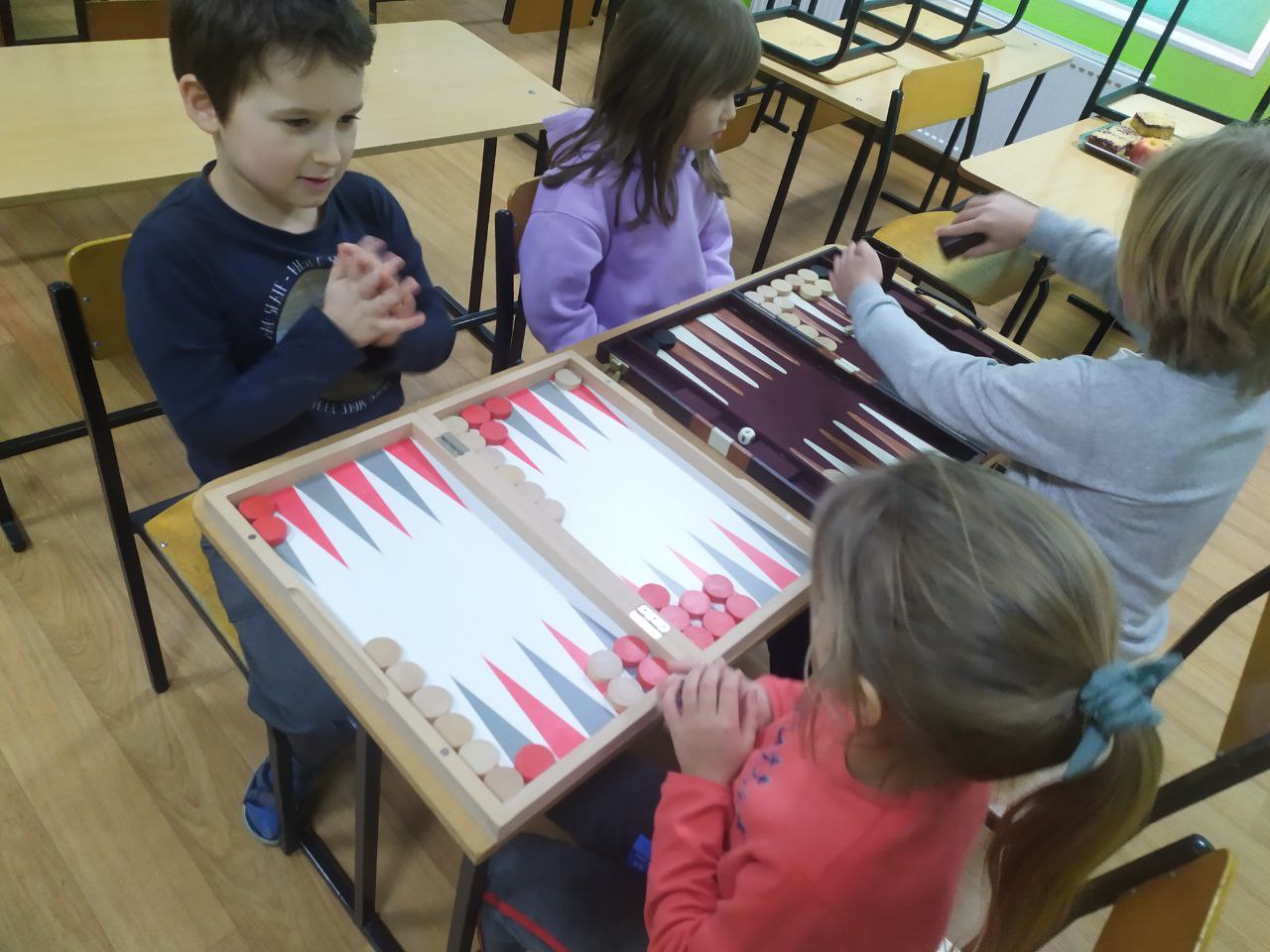
Seven reasons why you should teach your children to play backgammon
Phil Simborg is a famous teacher and popularizer of backgammon, the author of hundreds of articles and one of the most famous coaches of this game.
1. Backgammon helps children learn math
Backgammon is a great way to introduce your child to math. As the child matures and his skill grows, the mathematical component of the game becomes more and more difficult.
First, children learn to add the values of two cubes and count the number of points that the chips must pass on the board. Over time, they begin to understand probability and statistics: why it is easier to beat a chip from six points than one, which rolls happen more often than others, how the odds of winning are calculated, and when to double down.
In this way, the game develops mathematical thinking in a natural and exciting way.
2. Children learn to treat success and failure correctly
Backgammon helps to understand an important life truth: not everything depends on us.
Sometimes you're incredibly lucky, and sometimes the dice are stacked against you. The child learns to experience failure with dignity, not to despair after an unfortunate defeat, and to maintain self-control when circumstances are unfavorable.
It is equally important to learn how to win beautifully. If the parents set a good example, the child learns sportsmanship, respect for the opponent and the ability to rejoice in victory without arrogance.
These skills will come in handy far beyond the gaming table.
3. The game strengthens self-confidence
Mastering a complex intellectual game, which is usually played by adults, helps the child to feel his own competence.
When children realize that they can successfully play a serious strategy game, their self-esteem increases. They have a reason to be proud of themselves, to feel their uniqueness and their own achievements.
Backgammon can be a source of healthy self-confidence.
4. Backgammon expands the circle of communication
The gaming community opens up new opportunities for children to communicate.
Of course, children can get to know each other at school, sports sections and clubs. However, backgammon provides a rare opportunity to communicate with adults as equals.
This is especially noticeable in tournaments, where age is much less important than playing ability. The child learns to interact with people of different generations, which contributes to the development of social skills and confidence in communication.
5. This is a useful and exciting hobby
Backgammon can become a hobby for many years.
Today, a child can play both on a real board and on a computer. At the same time, the game requires thinking, analysis and decision-making, which makes it a much more useful activity than endlessly watching cartoons or many mindless video games.
It is entertainment that develops intelligence at the same time.
6. This is a game for the whole family
Backgammon unites generations.
It can be played by parents, children, grandparents. Moreover, a child can quickly become a serious rival for adults.
This creates a special family atmosphere where all participants enjoy the game regardless of age. Playing games together, traveling to tournaments and participating in gaming events become part of family life and create shared memories.
The author of the article notes that even when his sons grew up, backgammon continued to unite their family: they played together and traveled to tournaments.
7. Backgammon stays with a person for life
Many childhood hobbies eventually become a thing of the past.
A child may be involved in a certain sport or other hobby for years, but in adulthood these skills often cease to be used.
Backgammon is different. This is a game that can be enjoyed at any age - whether you are in your twenties, forties, sixties or eighties.
The earlier a child starts playing and learning, the more experience he will accumulate before adulthood and the stronger player he will become.
Are there any disadvantages?
Phil Simborg admits that some parents are wary of backgammon because of its association with gambling and betting.
However, he notes that today's kids are already constantly exposed to the topic of gambling through advertisements for lotteries, casinos, sports betting and television shows with prize money.
In the opinion of the author, it is much more useful to show the child that it is possible to play for pleasure, sports interest, skill improvement and the joy of victory, and not just for money.
It is this approach that parents can instill in their children by their own example.
Conclusion
Backgammon is not just a board game. It teaches mathematics, probabilistic thinking, patience, sportsmanship, communication and acceptance of life's failures.
This is a family hobby that can accompany a person all his life and bring pleasure regardless of age.